
Cyber Threats Behind Cloud AI
Adoption, What’s the Solution?
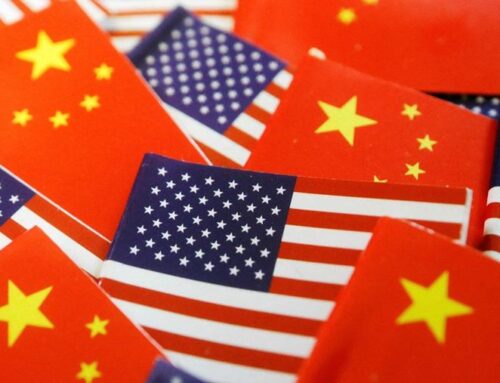
Jakarta, CNBC Indonesia –Nvidia CEO Jensen Huang has openly criticized the United States (US) government’s policy of tightening export controls on AI chips from the US to China. Huang said the policy was a big failure.
The reason is, blocking chips from the US to China has caused US companies to lose billions of dollars in potential sales. On the contrary, this has encouraged Chinese companies to develop advanced chips to beat the US.
“Overall, [chip] export controls are a failure,” Huang said, quoted by Reuters, Wednesday (5/21/2025).
‘The basic assumptions that fueled the AI Diffusion rule from the start have proven to have many weaknesses,’ he added.
For information, AI Diffusion is a rule signed during the Joe Biden administration. The rule divides countries into 3 categories (tiers) to get access to chips from the US.
The Trump administration overhauled the rule and claimed to simplify it. The new scheme prepared is a global licensing regime with a government-to-government agreement.
This means that countries that get access to US chips will make certain agreements with the US government that are mutually beneficial.
At Computex in Taiwan, Huang praised Trump’s new approach to AI. However, until now the form of the new rules regarding export controls on AI chips has not been clear in its implementation.
Huang said that since the beginning of the Joe Biden administration, Nvidia’s market share in China has plummeted to 50% from the previous 95%.
Huang said that more than half of global AI researchers are based in China. The export control policy imposed by the US on AI chips has forced these AI experts to return to China to develop technology domestically.
“Competition “We [the US] have a very intense relationship with China. They would love for us not to go back to China,” Huang said.
Huang estimates that China’s AI market will be worth $50 billion next year. This represents a huge opportunity for Nvidia, provided there are no policy obstacles from the US government.
SOURCE : CNBC INDONESIA