US-China Tensions Escalate Ahead of Trump-Xi Meeting
Jakarta, CNBC Indonesia –The United States (US) government has leveled serious accusations against Chinese artificial intelligence (AI) companies. Washington alleges that these companies deliberately and maliciously copied technology from American AI firms.
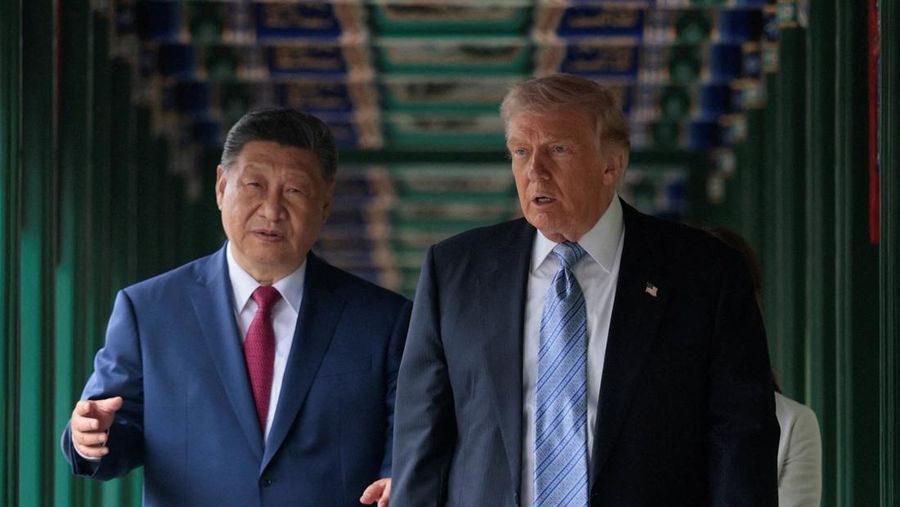
This move threatens to further strain relations between the two nations ahead of the planned summit between the leaders of the world’s two largest economies—U.S. President Donald Trump and Chinese President Xi Jinping—later this month.
According to statements from U.S. law enforcement and intelligence officials, Chinese companies have misappropriated intellectual property from U.S. AI laboratories using a technique known as “distillation.” This technique involves training smaller AI models by utilizing the output of larger, high-cost models, thereby reducing the training budget for new AI tools.
The US government has identified at least six Chinese companies involved in this activity, including DeepSeek, Moonshot AI, and Alibaba. They are accused of utilizing various US-made AI models to accelerate their product development.
US officials claim the actions were “highly likely carried out with the knowledge of the Chinese government.” The companies reportedly targeted AI models developed by Anthropic, OpenAI, Alphabet’s Google, and even SpaceX.
“China-based AI companies are engaging in aggressive, malicious, and targeted distillation activities on an industrial scale,” US officials said, as quoted by Reuters on Wednesday (September 9, 2026).
These latest allegations have surfaced as the Trump administration prepares to host Xi Jinping for a state visit late next month. Additionally, the two nations are scheduled to hold a special dialogue in mid-September to discuss AI-related security risks.
Beijing’s Firm Response
In response to the allegations, Chinese Foreign Ministry Spokesperson Mao Ning asserted that the rapid advancement of AI in her country is purely the result of achieving “high-level self-reliance in science and technology.”
“We hope the US will earnestly implement the important consensus reached by the leaders of both countries and refrain from making false accusations or smearing China’s reputation,” said Mao. “As major powers in artificial intelligence, China and the US should strengthen cooperation.”
Washington had previously leveled similar accusations last April, ahead of Trump’s visit to Beijing.
The US government assesses that this distillation practice not only cuts research and development costs for Chinese corporations but also boosts “China’s military and cyber-attack capabilities that could be used against the US and our allies.” This issue was further underscored by a Reuters report on July 31, which revealed that Chinese military researchers were utilizing output from leading US AI models to strengthen their domestic defense systems.
SOURCE : CNBC INDONESIA